Description
Health & Safety: Creating Safer, Healthier and More Productive Workplaces
A safe workplace is the foundation of a successful organisation. Effective health and safety practices not only protect employees from harm but also improve productivity, reduce operational risks, strengthen compliance, and contribute to a positive workplace culture. Organisations that prioritise health and safety create environments where employees can perform at their best while feeling safe, valued, and supported.
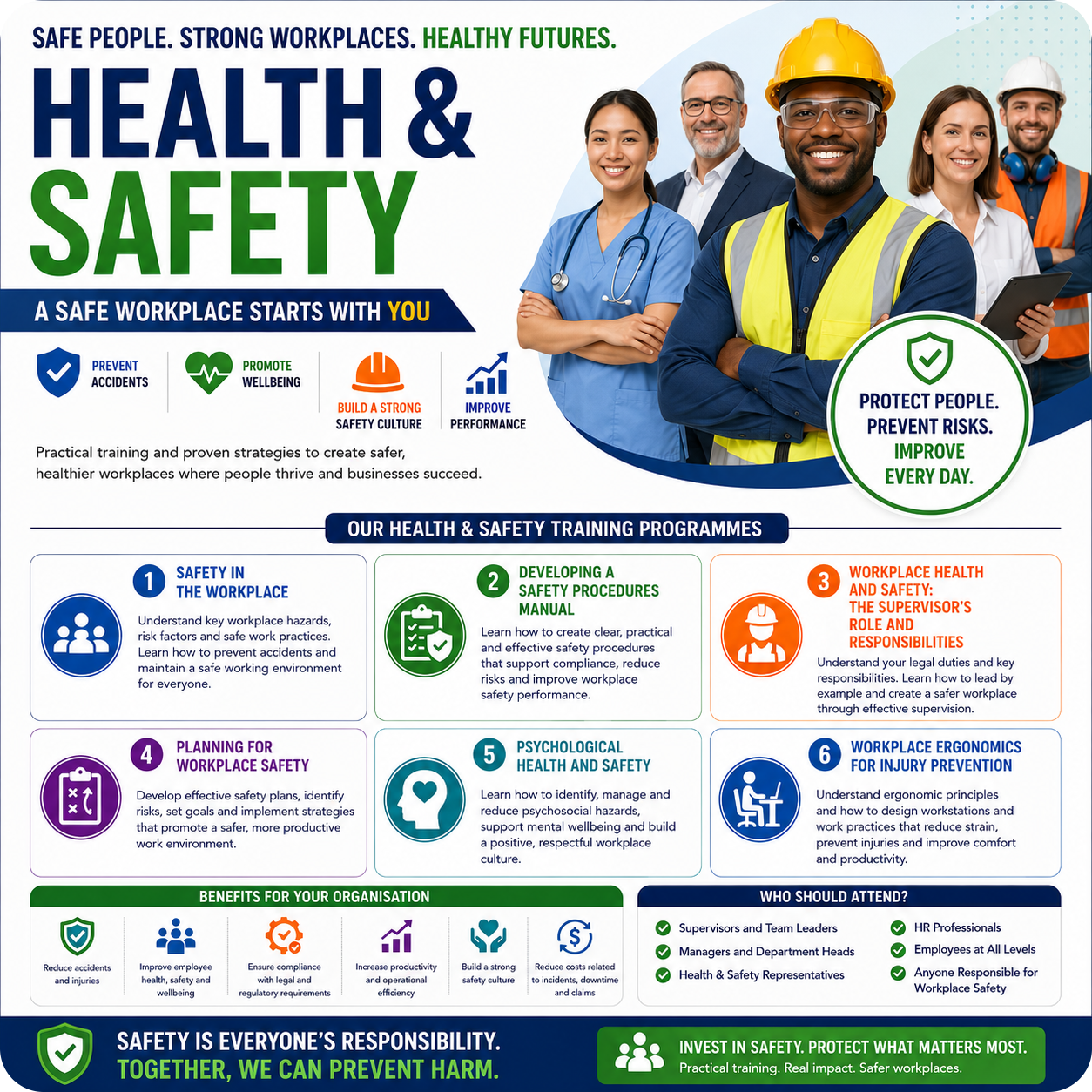
The Health & Safety programme is designed to equip employees, supervisors, managers, and health and safety representatives with the practical knowledge, skills, and strategies needed to create and maintain safe working environments. Participants will learn how to identify workplace hazards, implement effective safety procedures, fulfil health and safety responsibilities, promote psychological wellbeing, and reduce the risk of workplace injuries.
Through practical guidance, real-world examples, and industry best practices, this programme helps organisations build a strong culture of safety that protects people, supports compliance, and enhances overall workplace performance.
Key Learning Areas
Safety in the Workplace
Develop an understanding of workplace hazards, risk management, and safe work practices. Learn how to identify potential dangers, prevent accidents, and contribute to a safe and compliant working environment.
Developing a Safety Procedures Manual
Learn how to create clear, practical, and effective safety procedures that support workplace compliance and promote safe working practices. Participants will gain insight into documenting safety processes and establishing safety standards throughout the organisation.
Workplace Health and Safety: The Supervisor’s Role and Responsibilities
Understand the legal duties, responsibilities, and leadership role supervisors play in maintaining workplace safety. Learn how to identify hazards, support compliance, conduct safety monitoring, and promote a proactive safety culture.
Planning for Workplace Safety
Develop effective workplace safety plans that identify risks, establish preventative measures, support emergency preparedness, and create safer working conditions for employees and stakeholders.
Psychological Health and Safety
Explore the importance of psychological wellbeing in the workplace. Learn how to identify psychosocial hazards, reduce workplace stress, support mental wellbeing, promote inclusion, and create respectful work environments that support employee health.
Workplace Ergonomics for Injury Prevention
Understand ergonomic principles that improve comfort, productivity, and safety. Learn how to design workstations, equipment layouts, and work practices that reduce strain, prevent injuries, and support employee wellbeing.
Programme Benefits
✔ Reduce workplace accidents and injuries
✔ Improve employee health, safety, and wellbeing
✔ Strengthen workplace compliance and risk management
✔ Develop practical safety procedures and systems
✔ Promote a positive safety culture throughout the organisation
✔ Improve productivity through safer work practices
✔ Support mental health and psychological wellbeing
✔ Reduce costs associated with incidents and downtime
✔ Improve employee confidence and engagement
✔ Strengthen organisational resilience and operational effectiveness
Who Should Attend?
✔ Employees at all levels
✔ Supervisors and Team Leaders
✔ Managers and Department Heads
✔ Health and Safety Representatives
✔ Human Resources Professionals
✔ Operations Managers
✔ Business Owners and Entrepreneurs
✔ Anyone responsible for workplace health and safety
Learning Outcomes
Upon completion of this programme, participants will be able to identify workplace hazards, implement effective safety procedures, support compliance requirements, develop workplace safety plans, promote psychological wellbeing, apply ergonomic principles, and contribute to creating safer and healthier work environments.
Why Health & Safety Matter
Health and safety are essential components of organisational success. Effective safety management reduces risk, protects employees, improves operational efficiency, enhances organisational reputation, and supports legal compliance. Organisations that invest in workplace safety benefit from stronger employee engagement, lower incident rates, improved productivity, and a more positive workplace culture.
Creating a safe workplace is not solely a legal obligation—it is a commitment to protecting people and supporting long-term organisational success.
Invest in Safety. Protect What Matters Most.
Whether your goal is to strengthen workplace safety, improve employee wellbeing, reduce organisational risk, or build a stronger safety culture, this programme provides practical tools and proven strategies that create safer, healthier, and more productive workplaces.
Safe People. Safe Workplaces. Stronger Organisations. Better Futures.